200 Hour Yoga Teacher Training In Rishikesh

25 Days
Beginners, Intermediate
Yoga Alliance
Rishikesh, India

Calculation of 200 Hours TTC In Rishikesh

yoga ttc in india

Our schedule is designed in a way that it balances the practice with theory, and thus students will not get bored throughout the day.

Classes

20 days × 8 hours per day

160 Hours

Self-Study

20 days × 2 hours per day

40 Hours
✓

Total Course Period

20 Training days + 3 Off Days + Check-in 1 Day before the course + 1 Day for checkout

Total: 25 Days

160 hours (classes) + 40 hours (self-study)

= 200 Hours

Total Course Period:  25 Days
Training Days:  20 Days
Course Certification:  200 Hours

799 USD (Female Only) 4 Sharing Room

999 USD 2 Sharing Room

1199 USD Private Room

Duration 25 Days

Level: Beginner - Intermediate

Language: English

Style: Hatha, Ashtanga, Iyengar, Yin Yoga

Certification: By Yoga Alliance USA

Quick Enquiry

Your details are 100% secure.

Our 200 hour yoga teacher training in Rishikesh is a 25 day residential course. It is made for people who want to be a professional yoga teacher and want to know all the fundamentals behind yoga. Yoga has been practiced for centuries in Rishikesh, and that is why it is the yoga capital of the world. Asana, pranayama, meditation, philosophy, anatomy, and all the teaching techniques are all taught by our qualified instructors. You will have a yoga alliance certification and the useful skills need to instruct a class after the completion of our 200 hour course.

200 Hour Yoga Teacher Training in Rishikesh
⌖
Rishikesh Yoga Capital
✦
200 Hour Yoga Training
♡
Mind & Body Wellbeing

200 Hour Yoga TTC in Rishikesh: RYS 200 and RYT 200 Explained

yoga ttc in india

Yoga Alliance is the largest international registration of yoga schools and teachers. Schools register as RYS (Registered Yoga School). After graduating from registered yoga school, a person can become a Registered Yoga Teacher (RYT). It is a very important certification to begin your professional journey, many studios and employers requires it before you join as an instructor or start your own school.

What RYS 200 Means for Our School

Our school has a RYS 200 registration. Our curriculum, contact hours, and teacher certifications fulfill the Yoga Alliance's criteria. You can rely on the course material and certificate because we are evaluated according to such standards.

How to Enrolll in RYT 200 Following Graduation

You can apply for the RYT 200 designation after finishing the course. We guide you through the easy online process.

Steps for Graduate Registration:

  • Finish all of the training sessions and tests.
  • Get your certificate from our institution.
  • Make an account on the Yoga Alliance website.
  • Upload your certificate after selecting our institution as your training provider.
  • After paying the registration fee, await approval.

What You Will Learn in our 200 Hour Teacher Training Course In Rishikesh

yoga ttc in india
01

Yoga Philosophy

Understanding the concepts behind yoga and living a yogic life. The history of yoga, the Yoga Sutras, the Bhagavad Gita, Samkhya, tantra, kundalini and the yoga ethical rules (yamas and niyamas) will be taught. You will also get to understand how the culture and spiritual beliefs of India influenced the root of yoga as well as how to practically implement these teachings in life.

02

Meditation

We teach variety of techniques to relax the mind, to restabilise feelings and develop a level of concentration. You will be able to sit in a comfortable position, channel your thoughts without getting lost in them which will gradually deepen your focus and awareness.

03

Pranayama

Study how to control & direct your breath. The primary breathing exercises will be introduced along with mudras (people's postures and hand gestures) and bandhas (energies locks) you will learn the benefits of these practices on lungs, nervous system and mind. Pranayama provides you with more energy and makes your meditation more focused.

04

Mantra Chanting

Chanting traditional mantras without any errors in pronunciation and the meaning of each mantra will be taught. In addition, you will participate in songs for the group (kirtan). Chanting calms the mind, elevates spirits and develops one's focus prior to practice and teaching.

05

Ashtanga Yoga

Ashtanga Yoga is taught in a sequence of postures where each posture is linked with series of breath and movement. You will learn the standing and sitting postures of Primary Series as well as the finishing postures, vinyasa count, ujjayi breathing, mula bandha and drishti (focused gaze). You will also learn how to conduct the sequence, provide clear verbal instructions and provide safe variations for different students.

06

Hatha Yoga

This is one of the oldest practice of physical Yoga and involves the interdependence of postures, pranayama and meditation. This practice will have a steady pace so you can practice holding all the standing, sitting, balancing, bending, twisting and inverted poses. It Develops strength, flexibility and balance of body and mind.

07

Vinyasa Yoga

Learn to link breath and movement in smooth, flowing sequences. You will perform some Sun Salutations and dynamic movements, and how to conduct a class in which each pose seamlessly flows into the next one. With this style of practice there is a development of stamina, coordination and mindful movement.

08

Yin Yoga

Yin yoga uses slow and gentle movement and holding the pose for a longer duration of time, primarily on the floor. Has profound effect on the joints and connective tissues. You will learn the type of positions that can be used, the time duration hold them and how to teach this technique safely. It is a good balance to active yoga and teaches patience and awareness.

09

Restorative Yoga

Practice how to use props like blankets, bolsters, cushions and the wall to support the body completely in gentle poses. The purpose is to get a deep rest. You will learn how to set up each pose, and guide students to relaxation, helping them relieving stress and tiredness.

10

Sukshma Vyayama

These are gentle warm up movements for the joints and muscles which is done prior to performing asanas. You will be taught some simple sequences for the neck, shoulders, hands, hips, knees and ankles. They remove stiffness, enhance blood flow and are great for beginners, elder students, and people with limited mobility.

11

Laughter Yoga

Laughter yoga is laughter mixed with deep breathing, and someplayful group exercises. You'll learn how to lead it, as a forced laughter often turns into real laughter. It's perfect for brightening up the mood, relieving tension and for providing joy and building connection in a group.

12

Yoga Anatomy & Physiology

Understanding the functioning of human body during yoga practice. You will learn about the Skeletal, Muscular, Respiratory, Circulatory, Digestive, Nervous and Endocrine systems and also the Chakras. You will learn how each posture and practice impacts the body, letting you avoid injuries and teach your students safely .

13

Ayurveda

Ayurveda is the traditional health and life science in India. You will understand the three body types – Vata, Pitta and Kapha and how to identify each. You will also be taught on how food, daily routine and lifestyle should be adjusted for each type and to achieve balance of body and mind.

14

Osho Meditation

Osho meditation is an active style that uses dancing, shaking and free movement to release built-up physical and emotional tension, followed by silent rest. You will practise these techniques and how they can be used for people that struggle with sitting still at first.

15

Sound Healing Meditation

Experience meditation through sound using singing bowls, gongs, soft music and mantras. You will be lying down, and listening to the vibrations, without controlling your thoughts.This will help you lead others through this practice, to experience deep relaxation and peace of mind.

16

Yoga Alignment

Learning the correct alignment of the body in each yoga pose allowing the joints, muscles and spine to be protected. You'll learn to spot and correct common mistakes done by the students and be able to modify poses according to various human bodies based on their flexibility. This is the key factor for a safe and guided practice.

17

Teaching Practice & Methodology

Prepare to teach with confidence. You will learn how to plan a class, demonstrate poses, give clear instructions and make corrections during the class. You will be taking classes under guidance of our instructor and your batchmates for the purpose of teaching and honest feedback, allowing you to lead your own class by the end of the course.

18

Qualities of a Yoga Teacher

Understand what Makes a Good Yoga Teacher: patience, discipline, empathy and clear communication. There will be individual emotional/mental preparation, building confidence in front of the group and learn how to set up a calm, positive and trusting environment for your students.

19

Demonstration, Voice & Instruction

You will learn to clearly demonstrate poses and provide simple, easy to follow instructions. You will be practicing using your voice in class – tone, pace and pauses and learn to guide breath and movement together, so that students feel supported throughout the class.

20

Assisting & Correction

How to observe your students, identify common student mistakes and correct them in a kind and gentle manner. Verbal corrections and simple hands-on assist will be practiced along with the knowledge of when not to touch. This will keep your students safe and builds their trust with you.

Course Curriculum & Syllabus

Yoga divider
YOUR LEARNING JOURNEY

Asana means a posture that is steady and comfortable. In this section you will practice postures to build strength, flexibility, balance and the ability to hold the position for longer.

Sitting and meditative postures:

Baddha Padmasana, Dhyana Veerasana, Moolabandhasana, Eka Pada Sirsasana, Dwi Pada Sirsasana, Poorna Titali Asana

Standing postures:

Trikonasana (variations 1 to 4), Utkatasana, Veerabhadrasana (variations 1 and 2)

Balancing postures:

Palm Balancing, Saral Natarajasana, Vatayanasana, Uttitha Hasta Padangusthasana, Eka Padasana, Eka Pada Pranamasana, Vrikshasana, Garudasana, Baka Dhyanasana, Eka Pada Baka Dhyanasana, Garbhasana, Lolasana, Kukkutasana, Merudandasana, Dwi Hasta Bhujasana, Santolanasana, Vashisthasana, Mayurasana, Padma Mayurasana

Inverted postures:

Sirshasana, Sarvangasana, Padma Sarvangasana, Halasana, Viparita Karani

Twisting postures:

Ardha Matsyendrasana, Astavakrasana, Supta Udarakarshanasana, Meru Wakrasana, Parivritta Janu Sirsasana

Forward bends:

Pada Prasar Paschimottanasana, Ardha Padma Paschimottanasana, Yoga Mudrasana, Saithalyasana, Padahastasana, Koormasana, Supta Pawanmuktasana

Back bends:

Saral Bhujangasana, Tiryaka Bhujangasana, Saral Dharunasana, Dhanurasana, Shalabhasana (half and full), Supta Vajrasana, Ustrasana, Setu Bandhasana, Vrischikasana, Sarpasana, Kandharasana, Ardha Chandrasana

Dynamic postures:

Pawanmuktasana, Marjariasana, Surya Namaskar, Chandra Namaskar, Vyaghrasana, Hanumanasana

Relaxing postures:

Balasana, Savasana, Makarasana, Shashankasana

Pranayama is the practice of guiding the breath to increase vital energy. You will learn each technique with its theory, correct method and purpose, so your lungs, nervous system and mind are prepared for meditation.

  • Natural breathing
  • Abdominal breathing
  • Thoracic (chest) breathing
  • Clavicular breathing
  • Full yogic breathing
  • Nadi Shodhana with inner and outer retention and Jalandhara Bandha
  • Anuloma Viloma
  • Bhastrika
  • Kapalbhati
  • Sheetali and Sheetkari
  • Surya Bhedi and Chandra Bhedi
  • Purak, Kumbhak and Rechak (inhale, hold, exhale)
  • Ujjayi
  • Kaki Mudra
  • Bahya Pranayama
  • Karna Rogaanta Pranayama
  • Benefits: better lung function, stress management, improved sleep and a more controlled mind

Meditation trains the mind to become quiet and aware. You will practice a variety of techniques so you can find the method that suits you and guide others in it.

  • Om meditation
  • Mantra chanting meditation
  • Soham meditation
  • Shiva meditation
  • Yoga Nidra
  • Tratak (candle gazing)
  • Chakra meditation
  • Buddha meditation (Vipassana)
  • Inner light meditation
  • Prana meditation
  • Kundalini meditation
  • Benefits: less stress, better emotional balance, sharper memory and creativity

A mantra is a sacred sound that settles the mind and shifts the way we think. You will learn a selected set of mantras for your own practice and for use in class.

  • Ganesha Mantra: Vakratunda Mahakaya
  • Shiva Mantra: Karpoora Gauram
  • Santhosham Shanti Mantra
  • Mangalam Mantra and Samarpanam Mantra
  • Twameva Sarvam Mantra
  • Om Mantra
  • Vaidika Shanti Mantra
  • Kirtan (devotional group chanting)
  • Benefits: calmer mind, lower stress, better focus, a steadier nervous system and release of emotional tension

Yoga philosophy teaches that mind, body and spirit are one. Yoga is a practical way of living, not based on a religion. You will study the main thories and ideas behind the practice.

  • Why yoga? Its purpose and meaning
  • History and tradition of yoga
  • Shiva and Shakti concept
  • Yoga Sutra: the four paths and the discipline of life
  • Bhagavad Gita: introduction, steady wisdom, the path of devotion, the royal path, the three gunas and the knowledge of the field
  • Samkhya: the cause of pain, the way to self-realization, karma and sanskara
  • Stages of consciousness
  • Tantra: introduction and Vijnana Bhairava Tantra
  • Kundalini Yoga and Kundalini energy
  • Yogi, Rishi and Avatar concept
  • Mind, senses and soul
  • Yogic ethics: Yamas and Niyamas
  • Indian culture and spiritual traditions

A mudra is a gesture of the hands, face or body that influences the mind and the flow of prana. You will learn how to form each one correctly and what it is used for.

  • Yoni Mudra
  • Apana Mudra
  • Maha Bandha Mudra
  • Nasagra Mudra
  • Gyan (Jnana) Mudra
  • Hridaya Mudra
  • Bhairava Mudra
  • Prana Mudra
  • Simha Mudra

Bandhas are internal body locks used in Hatha yoga to direct energy and support pranayama. You will learn where each lock is applied and how to use it safely.

  • Moola Bandha (pelvic floor lock)
  • Uddiyana Bandha (abdominal lock)
  • Jalandhara Bandha (throat lock)
  • Maha Bandha (all three combined)

Knowing how the body works helps you practice safely and teach with confidence. You will study the main body systems and how yoga affects each one, along with the subtle body described in yogic tradition.

  • Respiratory system: structure, function and the effect of pranayama
  • Skeletal system: joints, how they move, and safe modifications of asanas
  • Muscular system: muscle function and its effect on posture
  • Cardiovascular system: heart, blood vessels and blood pressure
  • Digestive system: how digestion works and how it affects practice
  • Endocrine system: glands and hormones
  • Nervous system: nerves, nadis and plexus
  • Subtle body: physical, astral and causal bodies

Ayurveda is the traditional Indian science of health and long life. You will learn its basic principles and how they connect with yoga.

  • Holistic health
  • The three doshas: Vata, Pitta and Kapha
  • Sub-doshas (two parts)
  • Fasting and colon cleansing
  • Panchakarma (two parts)
  • Ayurvedic diet

Kriyas are cleansing techniques that purify the body and prepare it for deeper practice. You will learn the method, benefits and precautions of each one.

  • Jala Neti
  • Rubber Neti
  • Tratak

This section trains you to observe correct and incorrect posture and prepares you to lead a class with clarity and care.

  • Right and wrong alignment in asanas
  • Principles of demonstrating, observing, assisting and correcting
  • Use of voice in class
  • Positive and conscious communication
  • Building friendship and trust with students
  • Qualities of a good teacher
  • Time management
  • Mental and emotional preparation for teaching
  • Class preparation
  • Step by step class planning

Sukshma means “subtle”. These are gentle exercises that warm up the joints and muscles and wake up the body’s energy before the main practice.

  • Easy movements for the neck, shoulders, wrists, hips, knees and ankles
  • Benefits: better joint mobility, less stiffness, improved circulation and posture, more energy
  • Suitable for all ages, including beginners, seniors and people with limited mobility
  • Encourages mindful movement and present-moment awareness

Laughter yoga uses deliberate laughter, eye contact and playful group exercises. Forced laughter soon turns into real laughter, which lifts the mood and releases stress.

  • Laughter exercises done in groups
  • Combining laughter with deep breathing
  • Benefits: reduced stress, better mood and stronger connection with others
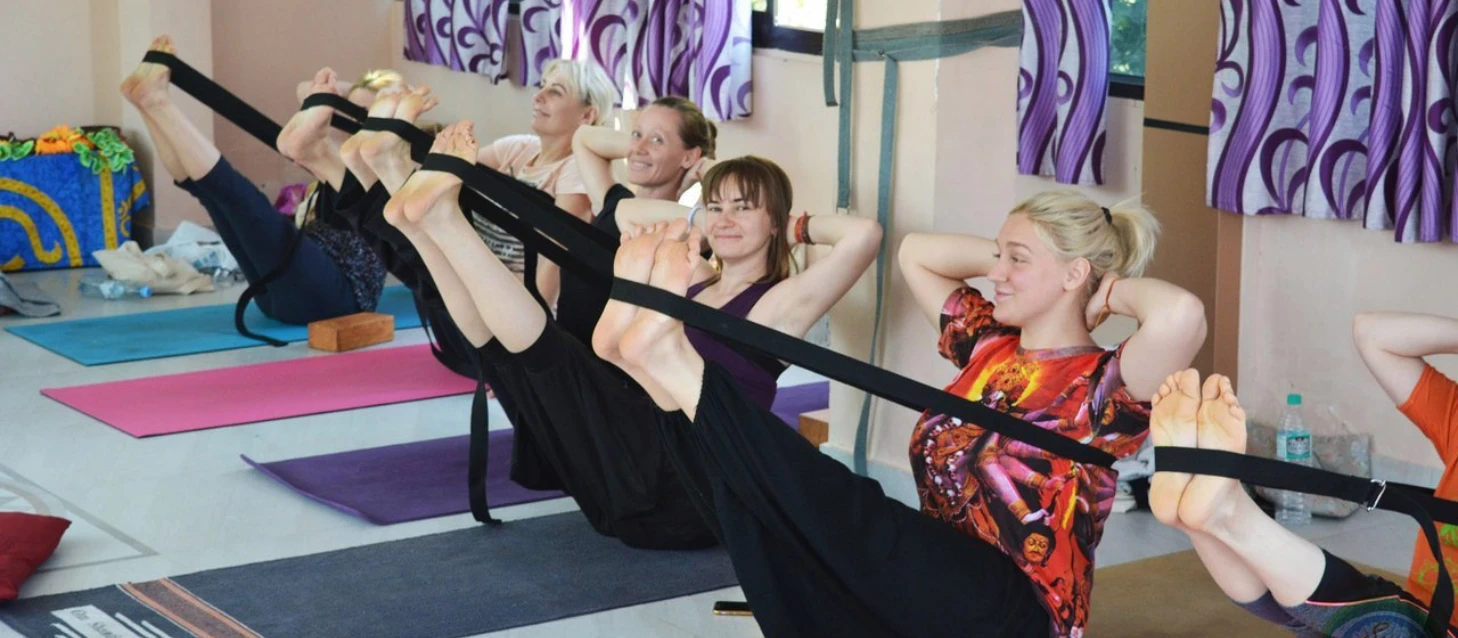
Yoga asana practice during teacher training
200 HOUR YOGA TTC 01 / 13
YOUR PRACTICE. YOUR JOURNEY.

Asana Practice

Build strength, stability and awareness through mindful movement.

Who Can Enroll in the 200 Hour Yoga Teacher Training Course?

yoga ttc in india

This course welcomes sincere students from all backgrounds who wants to be a professional yoga teacher. You do not need to be an advanced practitioner. You need discipline, an open mind and a willingness to learn.

Age, Language and Practice Experience

Students should be at least 18 years old. Classes are taught in English, so basic fluency is needed. Some basic yoga practice can be helpful not compulsory, beginners who wants to make yoga a profession are also welcome..

Health Declaration

Every student completes a short health form before the course begins. This lets our teachers adapt guidance for any injury or condition and keep your training safe.

Why Choose Us for the Best 200 Hour Yoga Teacher Training in Rishikesh

yoga ttc in india

Experienced Teachers

Our faculty have all the certified yoga teachers with years of practice and classroom experience. Each one specialises in their field, from anatomy to philosophy and other practices as well. They teach from the learning of their practical experiences, not only from the books.

Small Batches and Personal Attention

We keep our groups small. Every student gets personal attention, individual guidance, time with teachers and room to ask questions. Small batches also build a close, supportive community.

200 Hour Yoga Teacher Training in India: Upcoming Course Date

yoga ttc in india

200 hour Yoga Teacher Training in Rishikesh, India offered by Hatha Yoga Rishikesh.
Certified by Yoga Alliance, USA -RYS 200

Course Date 4 Sharing Room 2 Sharing Room Private Room Registration
05th Sep to 30th Sep 2026
16th Sep to 11th Oct 2026
799 USD (Female Only) 999 USD 1199 USD
05th Oct to 30th Oct 2026
16th Oct to 10th Nov 2026
799 USD (Female Only) 999 USD 1199 USD
05th Nov to 30th Nov 2026
16th Nov to 11th Dec 2026
799 USD (Female Only) 999 USD 1199 USD
05th Dec to 30th Dec 2026
16th Dec 2026 to 10th Jan 2027
799 USD (Female Only) 999 USD 1199 USD
05th Jan to 30th Jan 2027
16th Jan to 10th Feb 2027
799 USD (Female Only) 999 USD 1199 USD
05th Feb to 02nd Mar 2027
16th Feb to 13th Mar 2027
799 USD (Female Only) 999 USD 1199 USD
05th Mar to 30th Mar 2027
16th Mar to 10th Apr 2027
799 USD (Female Only) 999 USD 1199 USD
05th Apr to 30th Apr 2027
16th Apr to 11th May 2027
799 USD (Female Only) 999 USD 1199 USD
05th May to 30th May 2027
16th May to 10th Jun 2027
799 USD (Female Only) 999 USD 1199 USD
05th Jun to 30th Jun 2027
16th Jun to 11th Jul 2027
799 USD (Female Only) 999 USD 1199 USD

Note: Special discount USD 100 for early booking 3 months in advance,for package with Food & Accommodation only.

200 Hour Yoga TTC In Rishikesh - Daily Schedule

yoga ttc in india

Our schedule is designed in a way that it balances the practice with theory, and thus students will not get bored throughout the day.

◷ TIME DAILY ACTIVITIES
06:30 AM - 07:30 AM 01 Hatha Yoga
07:45 AM - 08:45 AM 02 Pranayama
09:00 AM - 10:00 AM 03 Breakfast MEAL BREAK
10:00 AM - 11:00 AM 04 Yoga Philosophy
11:00 AM - 11:45 AM 05 Yoga Anatomy
12:00 PM - 01:00 PM 06 Alignment & Adjustment / Teaching Methodology
01:00 PM - 02:00 PM 07 Lunch MEAL BREAK
04:15 PM - 05:45 PM 08 Ashtanga Vinyasa
06:00 PM - 07:00 PM 09 Meditation
07:00 PM - 08:00 PM 10 Dinner MEAL BREAK

Experience the Best Accommodation at Hatha Yoga Rishikesh

Yoga divider

At Hatha Yoga Rishikesh, we provide a warm and cozy stay for all our students, making it a home away from home. Our accommodation is planned in a way to support your learning experience so that you can completely concentrate on your yoga practice.

YOUR STAY, YOUR COMFORT

What We Provide:

01

Comfortable Stay

Choose between twin-sharing or private rooms, thoughtfully designed with contemporary facilities for a relaxing experience.

02

Separate Accommodation Facilities

Specific residential areas are provided to various programs which provide a specialized and focused learning environment.

03

Feel at Home

Enjoy a relaxed and calm environment that will facilitate your well being and yoga experience.

04

Modern Facilities

You will be staying in clean rooms that are well maintained with comfortable beds and other necessary facilities.

05

Air Conditioning Available

There are few AC rooms which will be offered at an extra expense (you need to make a prior reservation).

Comfortable accommodation at Hatha Yoga Rishikesh
STAY • RELAX • RECHARGE A peaceful place to call home

Nourish Your Body, Mind, and Soul with Our Delicious Vegetarian Food

Yoga divider

We at Hatha Yoga Rishikesh feel that the food you eat is a significant aspect of your yogic journey. Our trained kitchen personnel serve lovingly prepared homemade vegetarian meals to nourish your yogic life.

MADE WITH CARE

What We Provide:

01

Three Healthy Meals a Day

Savor vegetarian breakfast, lunch, and dinner from Monday to Saturday.

02

Herbal Teas & Juices

Soothing beverages to maintain your energy throughout the day.

03

Special Dietary Requirements

We accommodate vegan and gluten-free diets (inform us before booking).

04

Sunday Discovery

There is no food served on Sunday. You can enjoy exploring the cafes and eateries at Rishikesh.

Delicious homemade vegetarian food
Fresh • Homemade • Vegetarian

FAQs About the 200 Hour Yoga Teacher Training in Rishikesh India

yoga ttc in india

Yes. We are a Yoga Alliance registered school (RYS 200), and our course meets its standards for curriculum, teaching hours and also provides a yoga alliance certificate after comletion of the course.

Yes. After you graduate, you can apply to Yoga Alliance for RYT 200 status using your certificate. We help you through each step.

Most international students apply for a tourist or e-visa for short-term courses. Rules change, so please check current requirements with the Indian embassy or official visa portal. Our team can send you an invitation letter if needed.

The 100 hour course covers the essentials of asana, pranayama and meditation. The 200 hour program goes deeper, adding full anatomy, philosophy, Ayurveda and a teaching practicum. It is also makes you eligible for RYT 200 registration.

Fill in the application form on our website, pay the booking deposit and you will receive confirmation from our team. We provide complete joining details and assist you with all the necessary things required.

Days begin around 6:00 am with pranayama and shatkarma, followed by asana, breakfast and philosophy or anatomy lectures. Afternoons include lunch, rest, a teaching practice session and an evening meditation. Sundays are free.

Yes. You stay at our school or a nearby partner property. Three fresh, sattvic vegetarian meals are served daily.

Yes, if you are committed and healthy. Beginners may find the first week demanding. Practicing a little yoga before arrival helps.

Our certificate is recognised by studios and schools worldwide. You can also register yourself as RYT 200 after completing the course from our school to add international credibility.

February to April and September to November have the most pleasant weather in Rishikesh and is the best time to join this course. Summers are hot, and the monsoon (July to August) brings heavy rain.