Standing yoga poses are the building blocks of strength, stability, and proprioception. Before a yoga student goes in to sitting or lying down postures, the path of yoga opens with learning how to stand, breathing steadily, and feeling rooted as the body travels through space.
Table of Contents
- Understanding Standing Position Yoga
- Why Standing Position Yoga Asanas Matter
- Physical Benefits of Standing Position Yoga
- 1. Develops functional strength
- 2. Enhances Balance and Coordination
- 3. Improves Posture and Alignment
- Mental and Emotional Benefits
- Key Standing Position Yoga Asanas Explained
- 1. Mountain Pose(Tadasana)
- 2. Forward Fold in Standing (Uttanasana)
- 3. Chair Pose (Utkatasana)
- 4. Warrior I (Virabhadrasana I)
- 5. Warrior II (Virabhadrasana II)
- 6. Triangle Pose (Trikonasana)
- 7. Tree Pose (Vrikshasana)
- 8. Utthita Parsvakonasana (Extended Side Angle Pose)
- How Standing Position Yoga Builds Stability
- Conclusion: The Power of Standing Position Yoga
- Frequently Asked Question
- 1. What are the benefits of standing yoga poses?
- 2. What are the benefits of yoga asanas in standing position?
- 3. Do you recommend standing yoga poses asanas for beginners?
- 4. How often should I do standing yoga?
- 5. Are standing yoga poses good for posture?
- 6. Can doing yoga poses in standing position help me to lose weight?
- 7. What’s the Difference Between Seated and Standing Yoga Poses?
- 8. What are the best standing position yoga poses for balance?
- 9. Can I do standing position yoga at home?
- 10. How does standing yoga asanas enhance mental focus?
- Start Your Yoga Journey
In this day and age, long hours of sitting in office weaken posture and stability in those who live a busy life. These asanas teach the body to support itself, provide strength to the muscles and create a feeling of stability that extends beyond the mat and into our lives.
This manual investigates the significance of the standing position yoga and its physical, mental benefits, and also explains in detail leading yoga Asanas in standing position which help in developing strength, balance and stability in long term.
Understanding Standing Position Yoga
Standing yoga is a style of yoga that involves the practice of yoga asanas with the body in a standing position, that is, one or both feet are kept on the ground. These poses work large muscles, promote full-body alignment, and require attention to balance and breath.
Unlike passive poses, asanas in the standing position need energy. The legs hold the body, the spine lengthens upward, and the arms frequently reach out for openness and flow. This balance helps yogis feel both strong and steady simultaneously.
We can say that standing postures in yoga are a common beginning for both new and experienced yogis. They give beginners a sense of confidence and body awareness. For the advanced students they are a practice in perfecting balance, strength and the mindful breath.
Why Standing Position Yoga Asanas Matter
standing position are the pillar of any yoga system. If you can’t hold standing postures steadily, it’s hard to keep alignment in the more difficult postures.
Here is why standing position yoga is essential:
- It builds strength in the legs, hips, and lower back
- It promotes better Posture and Spinal Alignment
- It improves balance and co-ordination
- It increases concentration and emotional stability.
- It primes the body for deeper work.
Standing postures, in turn, reflect the way we move and stand in everyday life. The practice of yoga asanas in standing position makes us better walkers, better lifters, better sitters, and better carriers of ourselves during the day.
Physical Benefits of Standing Position Yoga
1. Develops functional strength
The standing yoga poses train the muscles we use in our daily motion. Thighs, calves, glutes, core and back muscles work in tandem to hold the body. This is functional strength rather than isolated muscle power.
Unlike gym exercises, which isolate individual muscles, standing yoga-asanas teach the body to move in one unit.
2. Enhances Balance and Coordination
Numerous standing position yoga poses involve balancing on one leg or holding steady as the arms and torso shift, which requires a transfer of weight. It challenges balance and helps coordinate mind and body.
With time, students report feeling more stable not only on their mats but also in everyday activities such as walking, climbing stairs and standing for long stretches.
3. Improves Posture and Alignment
Bad posture is a widespread problem from long periods of sitting and screen time. Standing yoga postures increase awareness of spinal alignment, shoulder placement, and weight distribution.
Consistent practice helps to repair postural deviations and promote a naturally upright posture.
Mental and Emotional Benefits
Standing yoga is so much more than just physical strength. It also strengthens the mind and emotion.
- Increases attention span and concentration
- Promotes aware breathing while moving
- Gains self-assurance with regular practice
- Calms the busy mind and anxiety
To stand still in a difficult position is to cultivate patience and fortitude. That psychological stability, over a period of time, is reflected in your day- to-day thinking and feeling.
Key Standing Position Yoga Asanas Explained
The following is a list of common yoga asanas in the standing position that can be easily modified and practiced for strength, balance and stability. The description of each posture has been written keeping in mind the fact that even a beginner should understand it.
1. Mountain Pose(Tadasana)
Tadasana – or Mountain Pose – is the foundation for all standing yoga asanas. It may be very simple, but it is the essence of standing correctly.
In this pose, feet are rooted, the spine is long, and breath moving naturally. Tadasana creates awareness of the body and acts as a guide for alignment in all other standing asanas.
Benefits:
- Enhances posture
- Strengthens legs and core
- Increases body awareness
2. Forward Fold in Standing (Uttanasana)
This standing poses folds forward from the hips with the legs stretched out. It gently stretches the hamstrings and spine and calms the mind.
Uttanasana teaches you how to find that sweet spot between effort and ease in a standing pose.
Benefits:
- Relieves tightness in the neck and back
- Enhances blood flow
- Promotes mental relaxation
3. Chair Pose (Utkatasana)
The Chair is a strong-standing powerful yoga asana which increases stamina and strength. The pose also works the legs and core, yet demands a calm and even breath.
It shows you how to hold your ground when your body is being pushed around.
Benefits:
- Tones thighs, hips and spine
- Develops endurance and concentration
- Enhances balance
4. Warrior I (Virabhadrasana I)
Strength and stability are perfectly illustrated in Warrior I mountain yoga pose standing. The legs are the strong foundation while the upper body opens up and out.
This posture represents the warrior’s confidence and has a grounded energy.
Benefits:
- Strengthens legs and shoulders
- Enhances hip flexibility
- Develops core strength
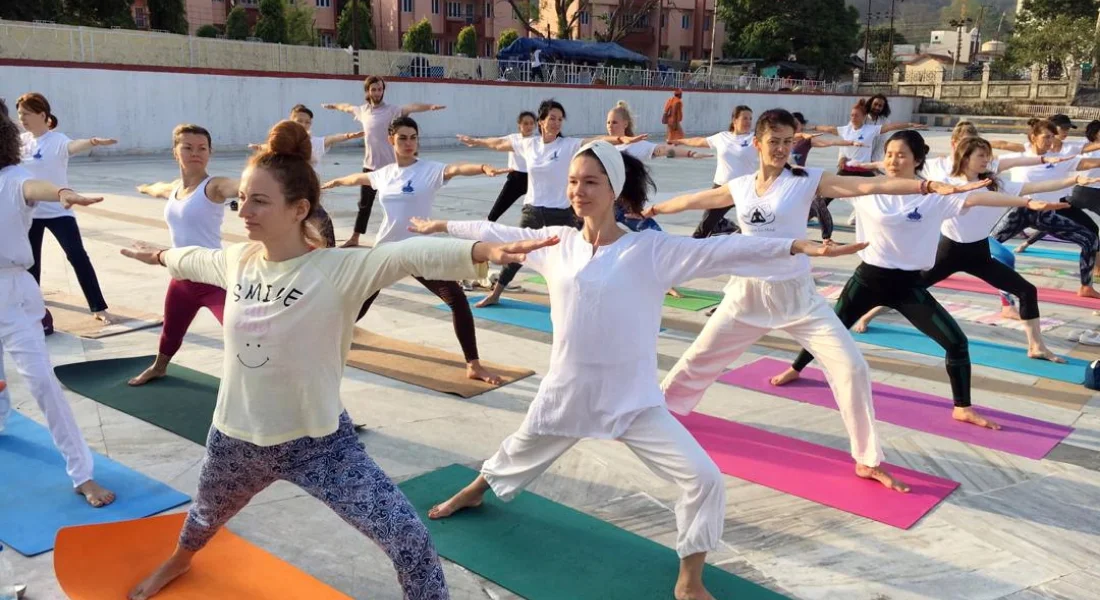
5. Warrior II (Virabhadrasana II)
Warrior II is all about strength and stability in the body from the side. It teaches us to ground down through the feet and redlines through the arms.
This standing post yoga pose is excellent for developing endurance and single mindedness.
Benefits:
- It tones legs and arms.
- Enhances stamina
- Makes you mentally alert
6. Triangle Pose (Trikonasana)
Trikonasana is one of the most versatile and beneficial core standing yoga poses for flexibility and balance. Place your feet wide apart and stretch to the side, creating length through the spine.
Benefits:
- Increases flexibility of the spine
- Legs Strengthening
- Improves balance and coordination
7. Tree Pose (Vrikshasana)
The Tree Pose balances the body and mind and allows the flow of energy to keep us calm. Standing on one leg is a full-attention game, so it’s great for concentration.
Benefits:
- Promotes better balance and stability
- Strengthens legs and ankles
- Improves focus
8. Utthita Parsvakonasana (Extended Side Angle Pose)
This is a kneeling side-bend yoga pose that is a great combination of strength, flexibility, and balance.
The pose opens the hips deeper, while solid ground is felt on through the legs.
Benefits:
- Builds strength in the lower body
- Increases flexibility
- Increases endurance
How Standing Position Yoga Builds Stability
Stability in yoga is not physical alone but mental and emotional too. Yoga asanas in the standing posture teach stability by requesting the practitioner to be still even when the body is exerting.
With consistent practice, the nervous system becomes adapted to challenges with equanimity. It is like an inner balancing act that allows you to handle stress, uncertainty and the pressure of everyday life.
Conclusion: The Power of Standing Position Yoga
Upright postures are the foundation of a powerful practice. They show us how to root, rise, and hover—physically and mentally, that is.
For those who are just starting out or those who have been practicing for a while, yoga postures in standing position provide an even blend of strength, balance and grounded centeredness. From standing position, with practice, patience and conscious awareness, it yoga becomes a potent anchor for your whole intelligence of well being.
Frequently Asked Question
1. What are the benefits of standing yoga poses?
Standing position yoga refers to practicing yoga poses in a standing position either with one foot or two feet on the ground. These poses help build strength, balance, posture awareness, and stability, so they are helpful for beginners as well as advanced yogis and yoginis.
2. What are the benefits of yoga asanas in standing position?
Standing yoga poses are good for leg strength, posture, balance, stamina as well as mental focus. They also lay the groundwork for more advanced poses by establishing a solid physical and energetic baseline.
3. Do you recommend standing yoga poses asanas for beginners?
Yes, standing position yoga asanas are indeed good for beginners. They increase body awareness, engage large muscle groups, and enhance coordination. Beginners with right guidance can progress at their own pace and pace themselves.
4. How often should I do standing yoga?
You can do standing yoga poses three to five sessions per week for results you can feel! Consistency trumps intensity. Just 20–30 minutes of regular standing practice can make a big difference to your strength, balance, and stability.
5. Are standing yoga poses good for posture?
Yes! Standing yoga postures are beneficial to posture and work to tone the muscles of the back, legs and abdominal that support good posture. They also enhance awareness of spinal alignment and the distribution of weight, which can contribute to greater confidence when standing and moving throughout the day.
6. Can doing yoga poses in standing position help me to lose weight?
Standing yoga asanas can also promote weight loss by working large muscle groups and causing greater stimulation throughout the body. When taken together on the regular with mindful breathing and good nutrition, they enhance metabolism and fitness level of body.
7. What’s the Difference Between Seated and Standing Yoga Poses?
When practicing yoga in the standing position, it emphasizes strength, balance and rootedness and in the sitting poses are more for stretching and relaxation. Seated asanas are of a more passive nature and are as such suitable for relaxation and meditation. Standing asanas enhance stability and stamina and provide a base for more profound seated and meditative practices.
8. What are the best standing position yoga poses for balance?
Tree Pose, Warrior III, and Triangle Pose are excellent standing yoga poses to build balance. These poses improve coordination and balance, and recruit and tone the small stabilizing muscles of the body which makes you physically steadier and mentally more focused.
9. Can I do standing position yoga at home?
Yes, with the right instructions and precautions, standing yoga positions can be done at home. Novices might fare best by taking a few classes with an instructor or attending a few drop in sessions to get a sense for proper alignment before practicing on their own.
10. How does standing yoga asanas enhance mental focus?
Standing poses need concentration, awareness of breath and alignment that is consistent. The practice of holding pose andsteady breathing educates the brain to be in the moment, distracting thoughts are suppressed, and focus increases.
Start Your Yoga Journey
If you feel inspired to explore Ashtanga Yoga more deeply, you can join:
- 100 Hour Yoga Teacher Training in Rishikesh
- 200 Hour Yoga Teacher Training in Rishikesh
- 300 Hour Yoga Teacher Training in Rishikesh
- 500 Hour Yoga Teacher Training in Rishikesh
- 200 Hour Yoga Teacher Training Course With Sound Healing
- 200 Hours Ayurveda Yoga Teacher Training in Rishikesh, India
- 100 Hours Ayurveda Yoga Teacher Training in Rishikesh, India
- 3/5/7/10 Days Yoga Retreat in Rishikesh, India
- 7 Days Yoga Nidra Retreat in Rishikesh
- 7 Days Ayurveda Yoga Retreat in Rishikesh, India
- Drop-in Yoga Classes in Rishikesh
At Om Shanti Om Yoga Ashram in Rishikesh, you will experience yoga in its most authentic and traditional form.