17 Sep, 2026
Yoga is not one technique that involves taking the body into a certain position or a certain pose. It is also about the way we think, act, breathe, look and live our everyday lives. This is expanded upon with sage Patanjali's 8 limbs of yoga.
The 8 limbs of ashtanga yoga reveal the pathway of good activity towards peace within the inner self. Following the 8 limbs path of yoga will enable one to cultivate a serene mind, a healthy body, positive habits, and increased self knowledge.
So, what exactly does yoga's "eight limbs" have to do with everyday life – which may seem impossible for a beginner to incorporate? Let's examine those one by one simply.
The 8 limbs of yoga are the eight aspects of the purely yogic way. They are NOT a list of yoga exercises! Others regulate our actions and practices, exercise our body and breath, and help us with our minds.
The 8 limbs of yoga are:
The eight stages help to bring the 8 limb path of yoga to the realm of more than just exercise.
The first part of Patanjali's 8 limbs of yoga is Yama. It gives us instructions on what to do and how to act with other people and towards the world.
Simple human values are the foundation of the first element of yoga; the eight moving steps. Don't need to use a yoga mat to practise Yama.
For instance, you can put into practice your kindness towards someone, returning what you have borrowed and not being unnecessarily angry would be part and parcel of your practice.
Whereas Yama is about what we do to others, Niyama is more about what we are doing to ourselves. This is the second in the series of 8 limbs of ashtanga yoga.
The practice of yoga is a journey of 8 limbs that will induce that personal growth that should be nurtured on a regular basis. Maintaining small points like keeping your area tidy, reading to yourself beneficial books or seeing your thoughts will help support Niyama.
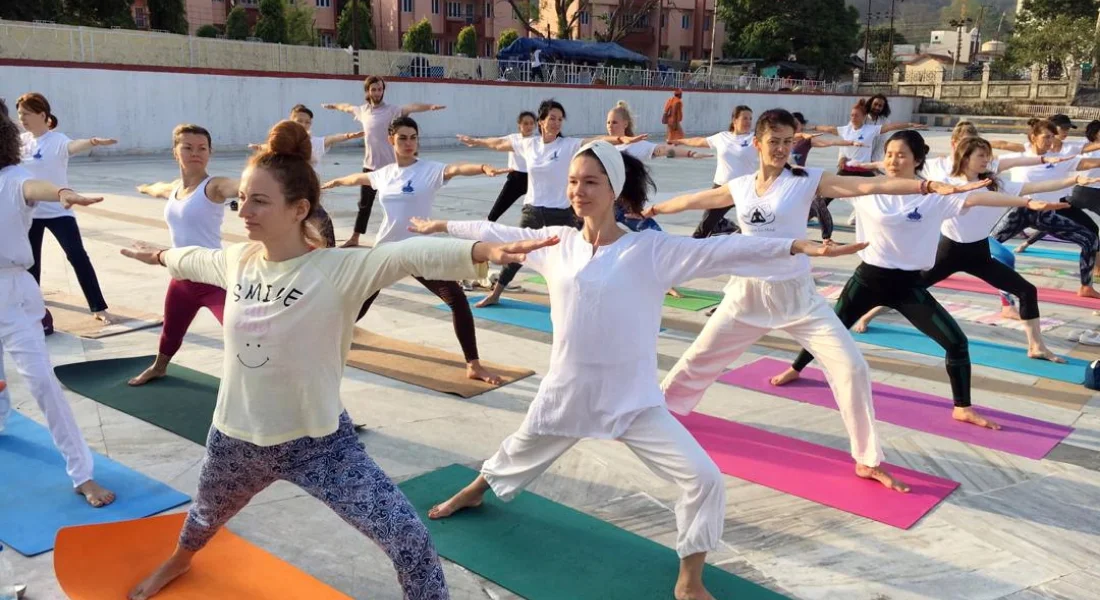
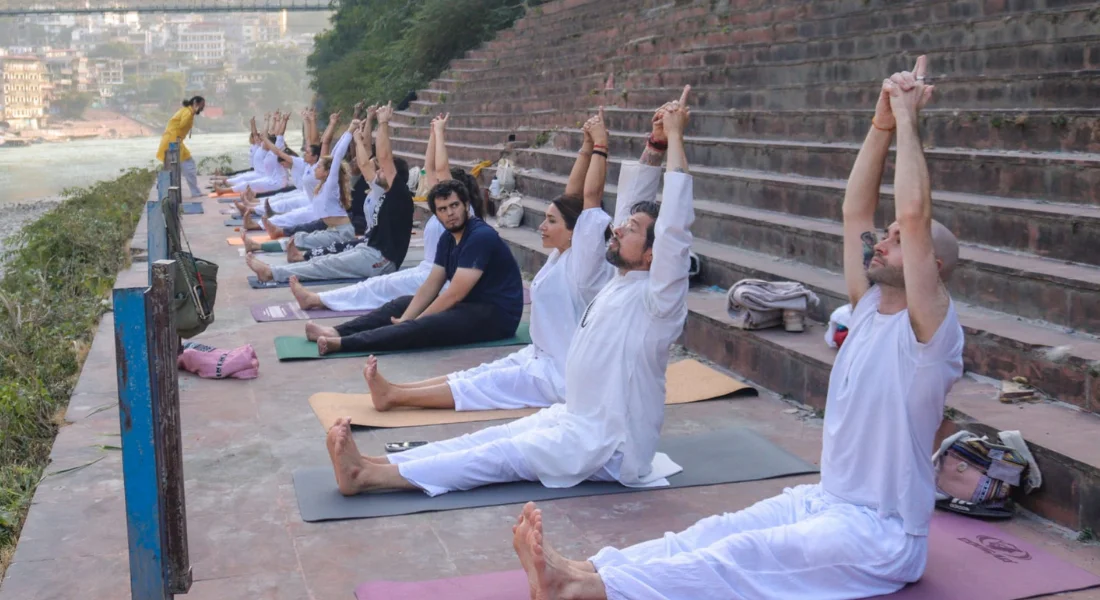
Asana is the third part of the 8 limbs of yoga. This is the limb that everyone knows when they say "yoga".
The position you get into the body steadily for stability while building awareness is an Asana. But, in Patanjali's system, yoga is not asana. It's only a part of the full route.
Your regular practice of asana helps to work on:
A proper teaching of yoga mudra asana, of course, could also be added to a traditional yoga programme.
The intent isn't necessarily to assert a flawless pose. The ultimate purpose is to be aware of the body and the mind.
Pranayama is the fourth of the 8 limbs of yoga. It is about the mind, breathing and the connection between breath, energy and mind.
If you're anxious, your breathing might become rapid. Pleasant breathing is frequently softer and slower during a restful body state. This connection is carefully utilised in yoga.
One traditional breathing technique that is used to establish a BH/VE balance is Nadi Shodhan Pranayama.
With the proper practice, Nadi Shodhan Pranayama can be a useful component in a peaceful yoga practice.
For beginners it is advisable to practise the breathing technique slowly and do not push breath!
The fifth of the 8 Limbs of Yoga is pratyahara.
Consider taking rest while the mobile keeps on resonating. While your body remains still, your mind is searching out the next message.
Pratyahara serves as a practice to lower this attraction to the senses and turn our focus on self.
This is one of the "8 Limbs of Yoga" in which there is a space between you and constant outside stimulation.
Dharana is the sixth 'ashtanga' of yoga, the eight limbs. It refers to being focused or focused upon some desired point of the mind.
This can be very simple for beginners, as it focuses on breathing.
Don't feel bad that you're thinking about other things. The reorientation of the attention consists of its return to itself.
Dhyana comes after Dharana and is the seventh part of the 8 limbs of yoga.
Dharana is aiming to remain on one point. Dhyana is a deeper continuous attention that is deeper and stronger.
Don't try to empty the mind by trying not to think. Rather, the intellect is calmed and affected in different ways.
This quiet meditation following Nadi Shodhan Pranayama can help you gain insights into the relationship between breath awareness and mental focus.
Can also work well for stillness and comfortable breathing that can aid the yoga practice of mudra asana with yoga meditation.
Samadhi is the 8th most deep mind of Patanjali's 8 limbs of yoga.
It refers to a state of great devotion, during which normal distractions and the sharp consciousness of separation between the meditation subject and the content of the meditation are rendered very quiet.
Samadhi is very difficult to achieve for a beginner; it is not something that can be attained in a short term.
The 8 limbs of yoga gradually lead towards greater self consciousness. Samadhi is the ultimate level of the inward journey.
This is not about acquiring anything new but more about moving into an extremely deep clarity and absorption.
In this regard, one common error is that the 8 limbs of ashtanga yoga are considered as 8 distinct steps.
They can be thought of as segments of a single route.
For example:
Yama - Niyama - Asana - Pranayama - Pratyahara - Dharana - Dhyana - Samadhi
One can engage in multiple limbs in one day.
This demonstrates why the 8 Limb path of yoga can be lived outside of the yoga class and in everyday life.
As you may guess from the simplicity of its name, yoga is a complete system for developing the body, behaviour, breath, senses, attention and inner awareness that is taught by the 8 Lamps of the Ashtanga system.
The 8 limbs of yoga remind us that:
This is especially beneficial when a person is completely new to yoga and can utilise the 8 limbs of Ashtanga yoga.
Today's life is filled with diversions. Most people are on the phone a lot, are stressed out, have poor sleep and have difficulty sitting down.
Yoga is a practice of slowing down and becoming more aware, with the 8 limb format of yoga.
It is not necessary to practise all things correctly. Make a small change as a start.
Make an effort to talk nicely. Sit quietly for 5 mins. Namaskar to an Awareness Asana. Take slow breaths. Observe your thoughts and don't reach out to them right away.
These little things in time can make the meaning and principles of the 8 limbs of yoga more apparent through experience.
The eightfold path of yoga reveals yoga to be a lot more than physical postures. All of these are significant facets of the yogic path that lead from the original base, Yama-Niyama, through meditation and Samadhi.
Patanjali's 8 limbs of yoga can help you realise why yoga is rooted in ethics, discipline, movement, breathing, concentration and meditation!
One of the best ways to learn the relationship of the 8 limbs of yoga is to live the principles of the limbs in everyday life. Practise slowly, be consistent and let practice build up on its own
We assure - you will bring back home new knowledge, memorable and enjoyable experience with you.
"Job fills your pocket... Adventures fill your Soul...!"