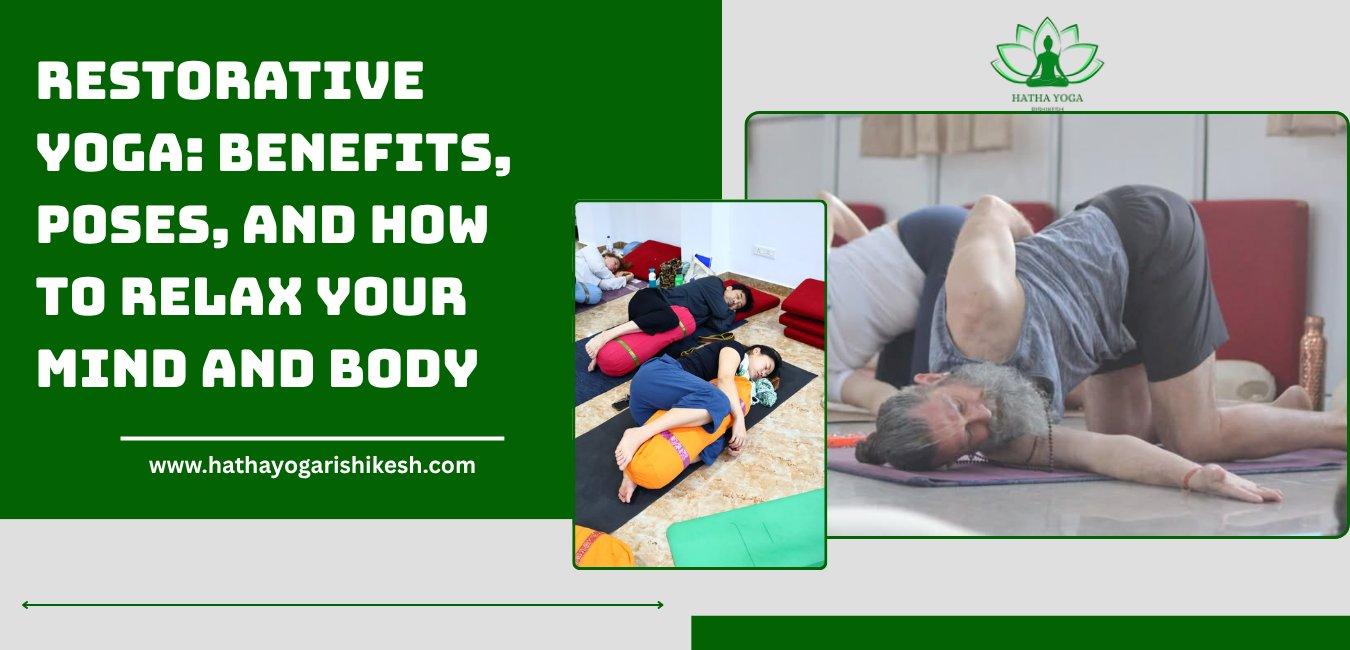
Restorative yoga is a slow pace and gentle yoga practice designed to help you get some rest and to bring your mind down. The slower yoga movements, with no really challenging postures or breathing, are used. There's no need for any intensive stretching and quick motioning. You hold the pose for a period of time and let the rest of your body relax.
Table of Contents
- What is restorative yoga?
- How Restorative Yoga Works
- Restorative Yoga Benefits for Mind and Body
- 1. Helps the Body Relax
- 2. Calms a Busy Mind
- 3. Supports Better Sleep
- 4. May Reduce Everyday Tension
- 5. Encourages Mindful Breathing
- 6. Gives the Body Rest
- Best Restorative Yoga Poses For Beginners.
- Child's Pose With Support
- How to practice:
- Supported Legs-Up-the-Wall Pose
- Supported Reclining Bound Angle Pose
- Easy Yoga Poses and Restorative Practice
- How to Practice Restorative Yoga at Home
- Set up a comfortable space.
- Follow a Slow Routine
- Restorative Yoga vs. Regular Yoga
- Who Can Practice Restorative Yoga?
- Listen to Your Body
- Make Restorative Yoga Part of Your Daily Routine
- Final Thoughts on Restorative Yoga
- Frequently Asked Questions About Restorative Yoga
- 1. What Is Restorative Yoga Mostly Used For?
- 2. How Does Restorative Yoga Help the Body?
- 3. Can beginners practise restorative yoga?
- 4. How Long Should Restorative Yoga Poses Be Held?
- 5. Which Restorative Yoga Poses Are Best for Beginners?
- 6. Can Restorative Yoga Improve Sleep Quality?
- 7. What Props Are Needed for Restorative Yoga?
- 8. Is Restorative Yoga Good for Stress Relief?
- 9. How Often Should You Practise Restorative Yoga?
- 10. Can Restorative Yoga Be Practised at Home?
Restorative yoga can be a soothing way to incorporate yoga into your life, for beginners. Spending some time after a busy day and a long day at work, after travelling, or also after a long tiring day may clarify the following learning. To make each pose more comfortable, pillows, blankets, bolsters and blocks can be used.
What is restorative yoga?
What is restorative yoga? A gentle yoga sequence to attend to deep rest in mind, body and soul. The primary aim is not about strength and calorie burn. The aim is to slow down, unravel tension and allow the body to rest.
The majority of restorative yoga postures are held for several minutes. The head, back, legs and/or arms are frequently supported by props.
How Restorative Yoga Works
A simple restorative yoga session may include:
- Slow and easy movements
- Comfortable sitting or lying positions
- Deep and natural breathing
- Long periods of stillness
- Support from pillows, blankets, blocks, or bolsters
- Relaxation of the mind.
This means that restorative yoga is appropriate for a lot of novices who wish to practise yoga in a milder fashion.
Restorative Yoga Benefits for Mind and Body
Repeated exercise can help make the body more comfortable as well as help to keep the mind quiet. The poses are rather easy to hold, so try to concentrate on breathing and relaxing more.
1. Helps the Body Relax
One of the main restorative yoga benefits is deep relaxation. The body has an opportunity to 'slow down' when you are supported in a comfortable pose.
This can be extremely satisfying after a long day when the muscles feel fatigue and tension that they will be amazed how beneficial it is for them.
2. Calms a Busy Mind
Overstimulated mind from doing too much work and exposure to screens and daily tasks. Restorative yoga is a quiet time during which these distractions aren't present.
Slow breathing and as still a pose as possible may be a way of feeling more calm and settled.
3. Supports Better Sleep
A less tense body and a less tense mind will make it easier to get ready for bedtime. A few gentle yoga poses to restore may be incorporated into a peaceful night routine.
Practise in a calm room, where lighting is low and dim, before bedtime.
4. May Reduce Everyday Tension
Stiffness in the shoulder, neck, hips and back can be a result of sitting too long. Some relaxing poses may offer a pleasant and relaxing way of letting some of the everyday tension go.
Any exercise that is hard, hurts or feels uncomfortable is not a safe exercise and will not help the condition.
5. Encourages Mindful Breathing
Restorative yoga is no exception to the fact that breathing is vital! Take deep breathes, and focus on your body's sensations.
It's also an easy trick that can help make your yoga practice more at ease on a regular basis.
6. Gives the Body Rest
This doesn't mean you have to do more “active” yoga. Sleep is also a critical component of good health.
Restorative yoga provides you the opportunity to stop and take time to lie down, to breathe, and to rest your body from the regular activity of your day.
Best Restorative Yoga Poses For Beginners.
There are numerous beginner restorative yoga poses that you can do at home or during yoga that will help you to restore yourself. They may hold them more comfortably and easily if they use props.
Child's Pose With Support
Because it is one of the easiest poses for relaxation, supported child's pose is one of the few that are supported. Lay a bolster, or folded blanket, in front of you and lay your upper body on the fold.
Take deep breaths and relax your shoulders.
How to practice:
- Sit on your yoga mat and bow down.
- Get knees in position to be comfortable.
- Rest a pillow or a bolster in front of you.
- Lean forward slowly.
- Rest your head and chest on the support.
- Do a few minutes of slow breathing.
Supported Legs-Up-the-Wall Pose
A soothing position which allows legs to rest while the body remains supported. It's easy for those looking for a peaceful evening when they finally get to sleep.
Position your body close to the wall, lie back and slowly push your legs up the wall. Don't tighten your arms next to your body.
When unsure if the position is comfortable, exit gradually.
Supported Reclining Bound Angle Pose
Another popular relaxing alternative for novices. Cut out by lying down on your back with the soles of your feet together. (Use cushions or folded blankets for more support under your knees!)
Relax your arms at the sides of your body and find your normal breathing.
Although this pose can be part of a soothing yoga sequence at the end of the day.
Easy Yoga Poses and Restorative Practice
You should try to begin your yoga practice with easy yoga poses if you are new to yoga to make it easier. Don't need to do challenging positions to enjoy yoga.
simple poses such as:
- Supported Child's Pose
- Legs-Up-the-Wall Pose
- Supported Reclining Bound Angle Pose
- Comfortable Seated Pose
- Supported Savasana
can be used to develop a soothing routine.
The intention is to stretch comfortably and not too far!
How to Practice Restorative Yoga at Home
No large room nor any special equipment is necessary. Your home can be a quiet and clean corner that will suffice.
Set up a comfortable space.
Prior to beginning, have the following products on hand:
- Yoga mat
- Pillow or bolster
- Folded blanket
- Yoga blocks, if available,
- Comfortable clothes
- Water
Have the phone away or put on silent mode so you can enjoy some quiet practice.
Follow a Slow Routine
Get started with only a couple easy restorative yoga postures. Sit in each posture for a couple of mins, taking normal respiration.
Take your time to go from one pose to another. Take a short break between poses if necessary.
A beginner routine can look like this:
- Sit quietly and take slow breaths.
- Try out the supported kid's pose.
- Step into Legs-Up-the-Wall Pose.
- Do supported reclining bound angle meditation.
- Finish with Savasana.
A few moments of relaxation can be provided at an opportune moment in a hectic day.
Restorative Yoga vs. Regular Yoga
Restorative yoga differs from lots of active yoga kinds. For a faster class, you can perform multiple poses and choose to focus on strength, balance, and/or flexibility.
Restorative yoga – slower (think yoga after a long rest!).
The primary emphasis of restorative yoga is on:
- Rest
- Comfortable positions
- Slow breathing
- Gentle support
- Quiet attention
- Relaxation
That dispenses with the notion that restorative yoga isn't worth it. Rest and active movement could both be incorporated into a well-rounded yoga practice.
Who Can Practice Restorative Yoga?
There is another variation of yoga referred to as restorative yoga which is suitable for novices as well as individuals that aren't looking for a powerful workout. It can also be employed on days it is desired to not have as action-packed a day.
But each body is distinct, though. Please consult a professional healthcare practitioner before beginning a yoga class if there is injury, recent surgery, severe pain, or a medical condition.
Listen to Your Body
In yoga, don't feel like you are competing with anyone! If the position of a pose results in sharp pain, discontinue that pose and change the position.
Utilise more support if necessary and position for comfort of reach. You can even have a teacher guide you in safely using restorative poses during yoga.
Make Restorative Yoga Part of Your Daily Routine
It's not a matter of long practice sessions. Even a 10-20 minute break can make a difference in your day.
Try practising:
- In the morning when you want a calm start
- After work to release daily tension
- Prior to going to bed at night
- Between active workouts, on rest days.
- When time requires rest and relaxation from screens.
Be consistent, that's the answer. It is easier to perform a simple practice that is enjoyable.
Final Thoughts on Restorative Yoga
Restorative yoga can be a slow, relaxing practice that will let the mind have some time to rest and the body to relax. It is friendly for beginners to practise due to its supported poses as well as its calming breathing.
Begin with a few restorative yoga poses, add in pillows or blankets for a sense of comfort, and gradually create a relaxing practice. Restorative yoga can be incorporated into one's lifestyle as one of the other yoga practices.
For those starting with yoga, if freeing up an hour doesn't leave you with enough time to maintain a balanced yoga programme, consider adding gentle practices and the benefits of yoga to support your yoga programme. Take it easy; breathe as normal, and relax. Don't force yourself into the poses.
Frequently Asked Questions About Restorative Yoga
1. What Is Restorative Yoga Mostly Used For?
Restorative yoga is usually used for relaxation, soft stretching, mindful breathing, and basically giving the body and mind a moment to rest, like without rushing.
2. How Does Restorative Yoga Help the Body?
It helps physical relaxation by using comfy, supported poses that may loosen everyday tension, and it invites gentle motion without any push or strain, so it feels kind of safe.
3. Can beginners practise restorative yoga?
Yes, beginners can do restorative yoga because the poses are gentle, slow paced, and supported with props like blankets, pillows, and bolsters.
4. How Long Should Restorative Yoga Poses Be Held?
Most restorative yoga poses are held for a few minutes, just long enough for easy breathing and deeper calming.
5. Which Restorative Yoga Poses Are Best for Beginners?
Supported Child’s Pose, Legs-Up-the-Wall Pose, Supported Reclining Bound Angle Pose, and Savasana are good simple options for beginners.
6. Can Restorative Yoga Improve Sleep Quality?
A calming evening practice can help the body settle down, and it may quiet a noisy mind, so restorative yoga becomes a helpful part of your bedtime routine.
7. What Props Are Needed for Restorative Yoga?
Common props are yoga bolsters, pillows, blankets, blocks, and mats. Even household cushions can step in for extra steady support while you practise.
8. Is Restorative Yoga Good for Stress Relief?
Yes, restorative yoga promotes slow breathing and quiet stillness, which can give you a gentle pause from daily tasks and from mental distractions.
9. How Often Should You Practise Restorative Yoga?
You can practise a few times each week, or whenever your body asks for easy movement and rest; it depends on your own rhythm and schedule.
10. Can Restorative Yoga Be Practised at Home?
Yes, restorative yoga can be done at home quite easily, in a calm room, with comfortable clothing, a mat, and simple supportive props.