bhramari-pranayama-steps-benefits-and-precautions

Picture this. After a stressful phone call or a long and tiring day at work, your head is buzzing with noise. You don't have time to take a long yoga class. You have 2 minutes.

This is where a simple humming breath can help. You only need your voice and your fingers! This blog will teach you the proper way to do it, who to be careful of and what it can do for you.

What Is Bhramari Pranayama?

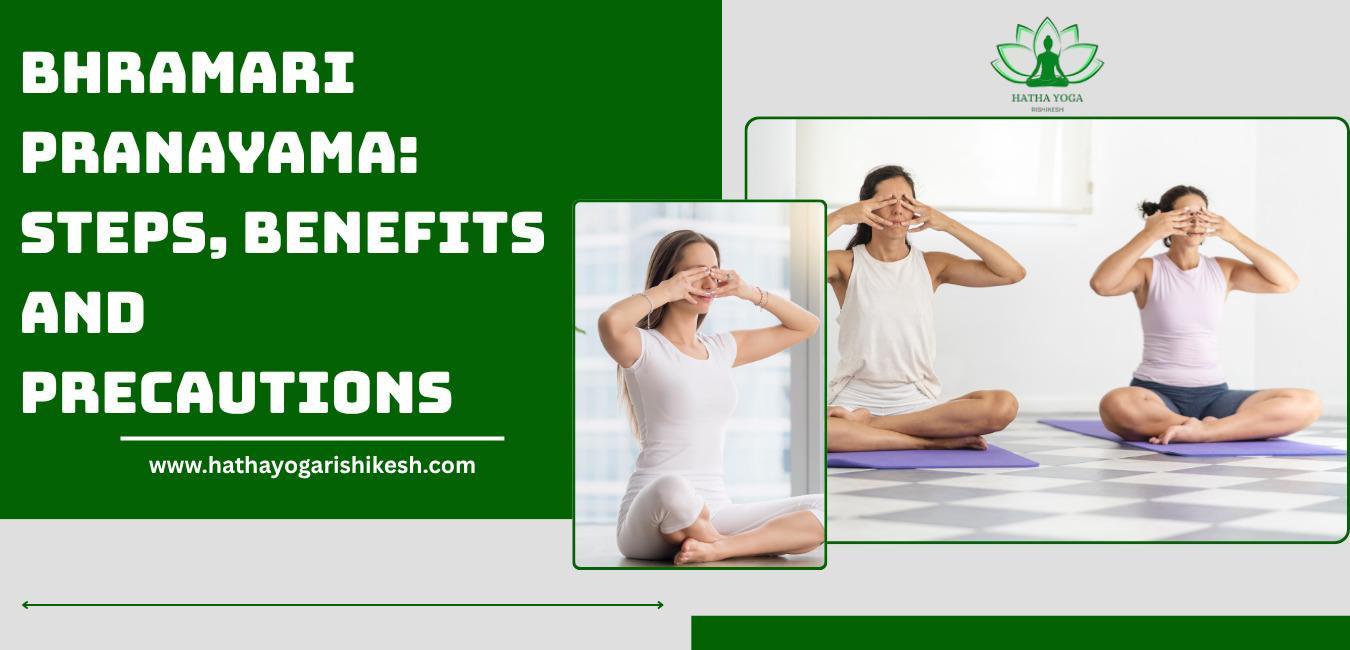
Now that you are wondering what is Bhramari Pranayama, here is the easy answer. It is a breathing practice from yoga in which you breathe in slowly through your nose and breathe out while making a soft humming sound, like a bee. Also gently shut your ears with fingers and the sound is in your mind.

It is not hard. It takes a few minutes for children, adults and older people to learn it.

Why is it called Bee Breath?

"Bhramari" comes from the Sanskrit word "bhramara", which means a black bee. When you hum during the breath, the sound is just like a bee buzzing. This is why it is known as Bee Breath or Humming Bee Breath.

Bhramari Pranayama Steps: How to Do It Right

It's not so much about the duration of time as it is about your technique. Now, perform these steps of Bhramari Pranayama slowly.

Before You Start

  • Pick a quiet area free from distractions.
  • Try on an empty or lightly fed stomach. Wait 2-3 hours after a meal.
  • Clothing should be loose and comfortable.

Step-by-Step Guide

  1. Sitting in an easy cross-legged position or on a chair with the feet flat on the floor.
  2. Maintain a straight back and relaxed shoulders.
  3. Close your eyes and smile slightly. This maintains the softness of the face.
  4. Place your index fingers on the small flap of skin in front of each ear. Press it lightly to stop the ear hole opening. Do not put your fingers inside the ear.
  5. Breathe in slowly through your nose.
  6. Now exhale slowly and deliberately from the nose making a low humming noise "mmmm".
  7. Feel the buzz in your head and face. When the breath ends, take the next breath in.
  8. Repeat 5 to 10 times. Then place each hand back and relax for 1 minute.

How Many Rounds Should a Beginner Do?

Start with 5 rounds. You can increase movement by a week or two to 10 rounds. This should take approximately 3-5 minutes.

Easy Fixes If It Feels Wrong

  • Throat feels tight: Hum softly. No need to use too loud a sound.
  • Head feels dizzy: Stop. Take breath at ease and rest. Next time, do take slow breaths.
  • Ears hurt: You are pressing too hard. Use very light pressure.
  • Mind keeps wandering: Just listen to the sound. Whenever you're trying to focus that hum will come back.

Bhramari Pranayama Benefits You Can Expect

Let's take a look at what this practice can do. Don't make empty promises and will be honest.

A Calmer Mind in Minutes

This is the first benefit that the majority of people discover. Breath is deep and the sound is continuous, there is one thing for the mind to follow. After several turns, many people experience relief from the tension and anger. There are small studies indicating some reduction in stress in the short-term when breathing is slow and rhythmic.

Better Sleep at Night

If you are having a busy time at bedtime, do 5 rounds before you get in bed. The slow breathing and humming let your body know that it is time to sleep. If you're seeking more profound sleep, complete this with our Yoga Nidra for Sleep guide.

Better Focus

It is used by students or office workers even before studying or doing a big task at work. Humming for two minutes may get rid of the "mental noise" and help the audience sit to focus.

Why Regular Practice Matters

Bhramari Pranayama benefits are not confined to just a single day. Remember that this is like drinking water - little bit often is much better than a lot bit once a week. See how it goes for 14 days each day. Next, let this question arise in your mind: Am I calmer now? Do I sleep better? Seeing the change is aided by a small note in a notebook.

A Lighter Feeling in the Head

A lot of folks report that their forehead and face will relax after the practice, particularly after a day of screen time. It's similar to an internal, calming massage by sound!

What It Cannot Do

There's the possibility of finding websites declaring this breath treats BHP (blood pressure) or thyroid troubles, or heart blockage. There is little evidence to support this claim. It can help you relax, be at your best or be good for your health. It is not a substitute for medical treatment or a doctor's advice.

When is the Best Time to Practice?

Bhramari Pranayama can be practiced at any time, except when your stomach is filled. Here are some of the moments in which it is easy:

  • Morning: to start the day with a calm mind
  • Before a test or meeting: to settle your nerves
  • After a stressful call: to let the tension go
  • Before sleep: to quiet your thoughts 

Alternatively, after the last Nadi Shodhan Pranayama a few minutes of sitting in silence is a possibility.

Bhramari Pranayama Precautions: Who Should Be Careful?

This is a activity but some individuals should not undertake it without being advised. If you have any of the following, consult your doctor or yoga teacher before:

  • have an ear infection, ear pain or recent ear surgery
  • have a cold, a sinus infection or a blocked nose
  • have very high or very low blood pressure
  • are pregnant
  • Currently suffer from a severe headache or migraine (headache)

Always follow these simple safety tips:

  • You should never stick anything in your ears!
  • Do not press on your eyes.
  • Stop if you feel dizzy, pain or discomfort.
  • Don't hurry the breath and the sound!

Final Words

Bhramari Pranayama is a small practice with a big feeling of calm. It takes only a few minutes, needs no equipment, and can be done almost anywhere. Start with 5 slow rounds, keep the sound soft, and be regular. Over time, you may find it easier to stay calm, sleep well and handle a busy day

Questions People Ask About Bhramari Pranayama

Beginners can do 5 rounds once or twice a day. Later, you can increase to 10 rounds if you feel comfortable.
Yes, night is a good time. It calms the mind and may help you fall asleep, as long as your stomach is not full.
Yes, it is gentle and safe for most healthy people. Learn it slowly, keep the pressure light, and stop if you feel dizzy.
It is better to wait 2 to 3 hours after a heavy meal. A light snack is usually fine, but listen to your body.
That is okay. Hum for as long as the breath feels easy. With practice, your breath will slowly become longer.

Leave a Comment

Add Comment *

Name*

Email*


Our Yoga Teacher Training Course in Rishikesh, India

yoga ttc in india

We assure - you will bring back home new knowledge, memorable and enjoyable experience with you.
"Job fills your pocket... Adventures fill your Soul...!"

100 Hour Yoga Teacher Training in Rishikesh India
100-Hour Yoga Teacher Training Course (YTTC)
  • Course Fee: $599
  • Accommodation: Shared
  • Yoga Style: Hatha Yoga
  • Duration: 14 Days
  • Certification: Yoga Alliance USA
200 Hour Yoga Teacher Training in Rishikesh India
200-Hour Yoga Teacher Training Course (YTTC)
  • Course Fee: $799
  • Accommodation: Shared
  • Yoga Style: Hatha Yoga
  • Duration: 25 Days
  • Certification: Yoga Alliance USA
300 Hour Yoga Teacher Training in Rishikesh India
300-Hours Yoga Teacher Training Course (YTTC)
  • Course Fee: $1399
  • Accommodation: Shared
  • Yoga Style: Hatha Yoga
  • Duration: 35 Days
  • Certification: Yoga Alliance USA
500 Hour Yoga Teacher Training in Rishikesh India
500-Hour Yoga Teacher Training Course (YTTC)
  • Course Fee: $2199
  • Accommodation: Shared
  • Yoga Style: Hatha Yoga
  • Duration: 55 Days
  • Certification: Yoga Alliance USA