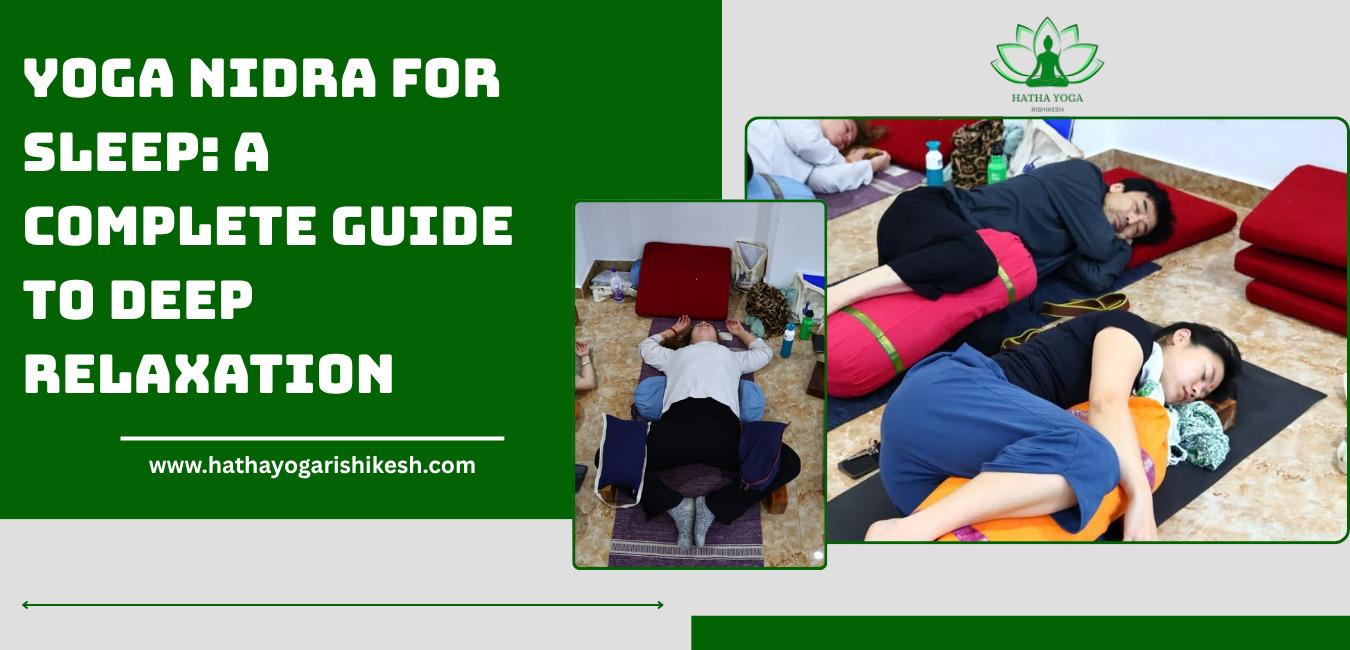
You have closed your eyes but your thinking hasn't. You look at the clock, turn around while you're sleeping, and still can't get any rest. This is where yoga nidra can be part of your easy evening routine.
Yoga Nidra is a guided experience in lying down position. It doesn't demand difficult postures or great physical exertion. It draws your mind away from the distractions of everyday life and into your breath, body and mind.
Yoga for relaxation (Nidra) for deep sleep is beneficial for many people as they get to make a private room prior to sleeptime. It can also be combined with gentle breathing and relaxing yoga practices.
What is Yoga Nidra for sleep?
Yoga nidra for sleep is a relaxation experience that uses a sequenced verbal process while lying in a comfortable position upright on your back. The body is still and the focus of your attention moves with a calm voice or along a simple series of instructions.
Unlike regular yoga classes, you don't stretch, balance or do some stilted poses.
How Does Nidra Yoga for Sleep Work?
Nidra yoga for sleep trains focus of one's attention, pointing it to different aspects of the body. Chances are you can also concentrate on inhalaion/exhalation, sounds, feelings, or just on having an intention.
These are some things that a normal session entails:
Getting comfortable on a mat or bed
Closing the eyes
Doing slow and natural breathing
Moving attention through the body
Noticing different sensations
Allowing thoughts to come and go
Turning attention back to the guided practice
Slowly finishing the session
The aim is not to sleep drive yourself to sleep. The objective is to bring in deep relaxation and to relax the mind.
Yoga Nidra for Deep Sleep: Why Try It at Night?
The mind is active during the night time. Work, study, family and any other activity fills up our minds throughout the day. At moments of quiet, the mind might become more alert.
That's why, yoga nidra for deep sleep can be a good option for the sleep time.
Take a break from your busy mind.
Don't try to shake your thoughts, it isn't a battle to be won. Instead, observe them and distractively return to the practice.
This easy trick can help ease the rushiness of bedtime.
Relax Your Body Before Bed
You don't always have to be tired for a loose and relaxed body. There can be a tension in the legs, face, stomach or shoulders areas.
If you practise yoga nidra for sleep, you seek to become able to observe each place without reacting to make them relax.
Create a Regular Night Routine
If you perform nidra yoga to sleep at the same time at night, your body gets a time of quietness.
One such exercise might be:
Finish heavy activities before bedtime
Lower bright lights
Stay away from the phone
Lie down comfortably
Practice Yoga Nidra
Rest after to recuperate.
Yoga Nidra for Sleep and Anxiety
Perhaps worry is associated with sleeping difficulties for some. You can focus on what is going to happen next day, relive something from today or think about things you can't change.
When practicing yoga nidra for sleep and anxiety, its emphasis is on slowing the attention down rather than taking no action against thoughts of anxiety.
What to do when the mind is overloaded?
For sleep and anxiety do this simple exercise by breathing through yoga nidra techniques:
Notice that your mind is acting.
Resolve to believe and not to think.
Bring attention to your breathing.
Sink into your body and squeeze.
Follow the directions carefully.
Bring the attention back to the practice when it dissolves.
Don't force your mind to be totally blanked! It is not to that end.
Yoga nidra for sleep and anxiety can be a simple practice to do when you feel the mind is 'full'.
Nidra Yoga for Sleep: A Simple Beginner Routine
Nidra yoga for sleep can be practiced in any type of room and doesn't require any particular experience of yoga.
Step 1: Choose a Comfortable Place
Lie on your back on a yoga mat, bed, or another comfortable surface.
Use a pillow to rest your head if necessary.
Step 2: Make Your Body Comfortable
Keep the legs out of the stretch and drop them to the side of your body. Avoid stiffening arms as you keep them next to the body.
Use a blanket if you feel cold.
Step 3: Begin Natural Breathing
Do not make an attempt to take deep breaths.
Simply notice:
The air you breathe in through your nose
The movement of your chest
The movement of your belly
Slow inhale of each breath exhale
Step 4: Move Your Attention Around the Body
Slowly bringing the attention to other areas.
For example:
Right hand → right arm → shoulder → left hand → left arm → chest → stomach → legs → feet
This sense of body awareness module can ground Yoga nidra for deep sleep.
Step 5: Slowly let the Practice end
Avoid getting up at the end of the session.
Breathe normally for a few times and permit fingers / toes to move slowly.
No problem if one starts sleeping while engaged in yoga nidra for sleep. Inducing sleep could be a natural property, when the body is profoundly relaxed.
Yoga Nidra for Deep Sleep With Other Yoga Practices
Yoga Nidra does not have to be your only evening practice. A soothing routine can be developed by using it together with other soothing strategies.
Add Nadi Shodhan Pranayama
Alternatively called as Nadi Shodhan Pranayama is a breathing technique that exercises the alternate nostrils. It is already part of the site's recent teaching materials, however can be utilized here as a brief breathing practice preparation for Yoga Nidra instead of repeating the full technique guide.
A few calming moments of breathing and yoga nidra for sleep can establish a soothing rhythm at the end of the day.
Try Restorative Yoga First
In restorative yoga, the yoga poses are seated and/or supported with comfortable chairs, and the pace is slow. Prior to yoga nidra, it may be helpful when your body is physically tensed when going in deep sleep.
Many start learners believe that they need to have the practice. You do not.
Avoid These Common Problems
Over-ambitious to go to sleep
Starting timer over and over
Practicing with a very uncomfortable setup
Don't place your cell phone next to your face.
Expecting instant results
Becoming frustrated when thoughts appear
Forcing your breathing
Gentle attention is the most crucial part of Yoga nidra, and also the most crucial component of the sleep and anxiety practice.
How Long Should You Practice Yoga Nidra?
There's no right time for everyone.
Beginners can first partake in a brief guided session and gradually increase duration of it, if comfortable.
Choose a Time You Can Maintain
Some people opt for sleep-oriented Yoga nidra just prior to sleep. Some prefer to make use of the morning hours for their exercise.
Experiment with varying times and observe the following:
Every session doesn't need to be lengthly, it's the consistency that is important.
Can Yoga Nidra Replace Normal Sleep?
Yoga nidra deep sleep techniques are not yoga sleep, but are a relaxation technique.
You still need to get good sleep. Yoga Nidra can be used in a relaxing bedtime part of routine but cannot be used as remedy for persistent sleep disorders.
If you struggle with sleep regularly, have to get up many times throughout the night or are very sleepy, you may need to get some medical advice.
Make Yoga Nidra Part of Your Night
Nidra yoga for sleep is the simplest form of yoga. The flexibility, strength, and yogi experience are not required.
You need only to have a place where you can relax and a moment of silence.
Begin with a couple of easy things:
Practice around the same time.
Keep the area warm and cosy.
Put away distracting devices.
Utilize the guided session to get started
Keep breathing normally.
Do not force sleep.
Allow your schedule time.
Yoga nidra to sleep can be a serene transition from a hectic day to a calm night. Over time you might start to enjoy this relaxing segment of your evening.
There is just one thing: slowing down, becoming aware, relaxing and letting your body rest
Questions Beginners Often Ask About Yoga Nidra for Sleep
Beginners can start with a short guided session and gradually increase practice time based on comfort and personal bedtime habits.

Leave a Comment
Our Yoga Teacher Training Course in Rishikesh, India
We assure - you will bring back home new knowledge, memorable and enjoyable experience with
you. "Job fills your pocket... Adventures fill your Soul...!"